




Distress among corporations across Europe eased in Q3 but remains above the long-run average, according to the latest Weil European Distress Index (WEDI).
The overall index fell to 2.7 in August from 2.8 in May, reversing some of the deterioration recorded earlier in the year.
The report also found that European corporations absorbed some of the initial shock from the conflict in the Middle East better than expected, supported by more resilient economic activity.
The UK remained the third most distressed country, behind France and Germany, as it eased to 4.0 from 4.4 in the previous quarter. The figure was higher than the 3.6 recorded in 2025, but the UK economy proved more resilient than predicted, with GDP up 0.4% in Q2 and business investment up 1.7%.
The IMF also raised its 2026 UK growth forecast to 1.0%, but financing costs remained a significant source of pressure, particularly for smaller businesses.
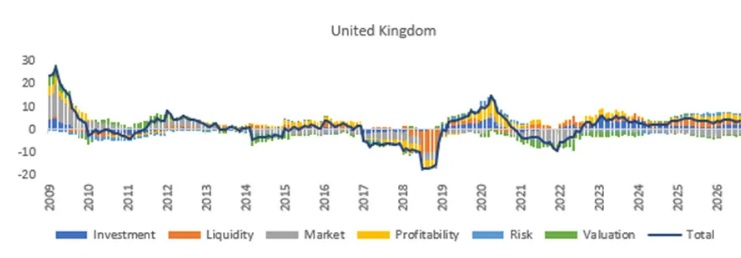
Weil European Distress Index- United Kingdom
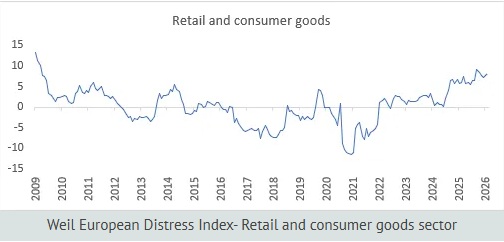
WEDI showed that the retail and consumer goods sector across Europe remained the most distressed, with the index rising to 8.1 in August from 6.0 the previous year as profitability, investment, liquidity and valuation came under pressure.
Rising inflation, pressure on personal finances and fragile consumer confidence continued to weigh on discretionary spending, while higher energy, transport and financing costs squeezed margins and cash flow.
Industrials became the second most distressed sector, although it was less distressed than in the previous quarter. Stronger manufacturing activity and export demand provided some support, but profitability and investment remained under pressure, with higher energy costs and tighter credit conditions continuing to soar.
Andrew Wilkinson, partner and head of Weil’s London restructuring practice, said: “The latest data suggests businesses have absorbed the first wave of geopolitical and economic disruption better than many expected. But resilience should not be mistaken for recovery.
“Distress remains above normal levels and financing conditions are still challenging. If borrowing costs remain elevated while demand and margins stay under pressure, we could see this continued level of distress begin to feed through into higher default rates across Europe.”
 Trident home
 Follow us on LinkedIn