




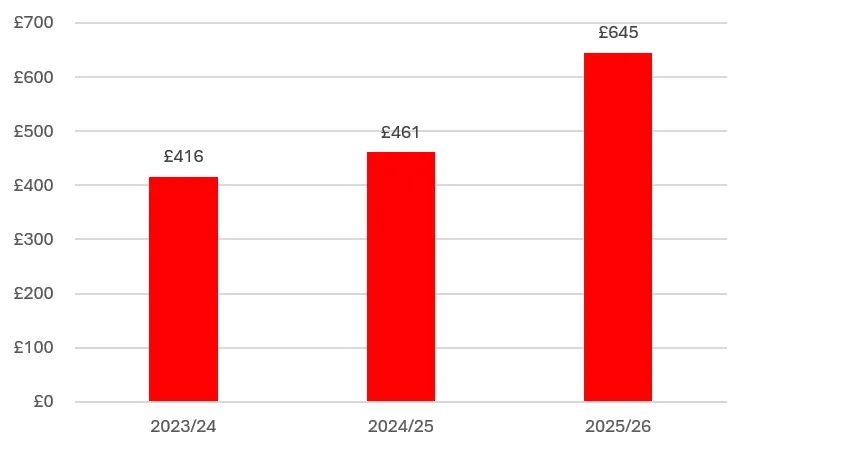
HMRC is targeting large property companies for up to £645m in additional tax over the 2025-26 financial year, up 40% on last year, Property Week can reveal.
The data – obtained by law firm Bryan Cave Leighton Paisner (BCLP) via HMRC technical notes and a freedom-of-information request – shows HMRC is stepping up scrutiny of large property groups, with the figure up from the £461m in tax under review for 2024-25.
The figures come from HMRC’s Large Business Directorate (LBD), which works with around 2,000 of the UK’s biggest businesses, including the largest listed property groups.
Its tax-under-consideration estimate for the largest property companies is an assessment of the maximum potential additional tax liability in each case before HMRC has carried out a full investigation.
According to BCLP, the rise in tax under consideration reflects a shift in HMRC’s compliance strategy, with more than 1,600 compliance officers hired in 2025-26 and a target of an additional 5,500 officers by 2030.
“The sharp rise in HMRC’s tax under consideration for the real estate sector likely reflects the ramping up of compliance activity,” BCLP partner Elizabeth Bradley told Property Week.
“HMRC is under growing pressure to close the tax gap. As it directs more resource and data analytics into reviewing transactions and financing arrangements, real estate groups are seeing a greater number of issues flagged for detailed examination. This is not necessarily a sign of increased non‑compliance, but of a more challenging compliance environment.”
Tax under consideration £m for the UK’s largest property companies
The figures suggest the strategy is bearing fruit, as HMRC generated more than £50bn of compliance yield for the first time in the 2025-26 tax year.
Alongside increasing scrutiny, BCLP claimed HMRC was also becoming less willing to provide clarity on the tax treatment of transactions before they took place. Data obtained via the Freedom of Information Act shows 41% of requests for HMRC confirmation of tax treatment were rejected in 2025-26 — the highest level in five years.
HMRC’s refusal to provide a definitive ‘yes’ or ‘no’ answer has risen even more sharply in some areas, with 63% of requests relating to corporation tax rejected, more than double the previous rate of around 25% to 30%.
Bradley said: “HMRC’s increasing unwillingness to provide clarity risks undermining taxpayer engagement. When taxpayers ask for guidance and receive no definitive answer, it becomes harder for them to engage confidently with HMRC before completing a transaction.
“This poses a real dilemma for real estate groups. At a time when more are seeking clarity on SDLT [stamp duty land tax] positions, HMRC is becoming more reluctant to provide definitive answers. Unfortunately, it is difficult to see the situation improving in the short term.”
 Trident home
 Follow us on LinkedIn