




Office occupiers are prioritising reconfiguration and tighter portfolio management over expansion this year, according to Irwin Mitchell.
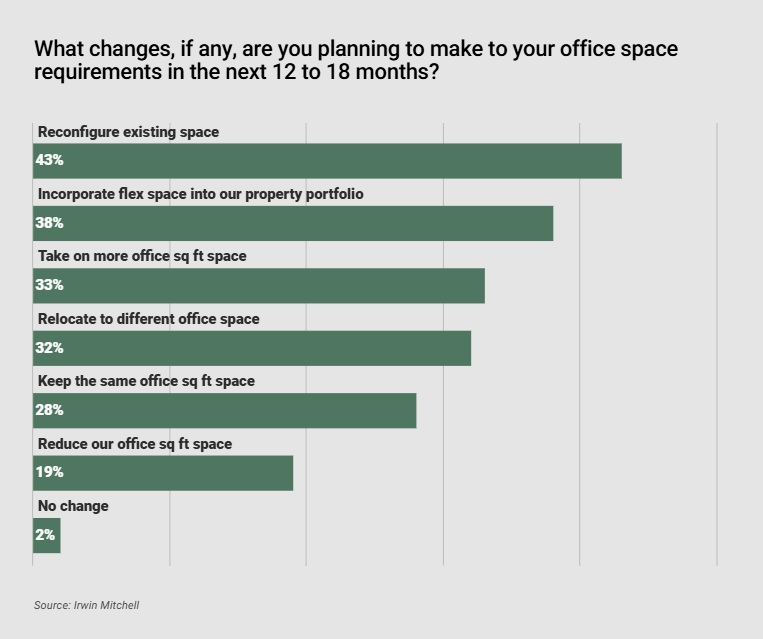
What changes, if any, are you planning to make to your office space requirements in the next 12 to 18 months?
Infogram
The law firm’s latest Office Occupiers Survey of 500 UK-based senior decision-makers responsible for office space shows occupiers are becoming more selective in 2026.
Year-on-year findings show a sharp drop in expansion plans, but more appetite to relocate. The research also indicates occupiers are taking a more active approach to managing space.
Many are investing in fitting out and reworking existing premises, while flexible workspace is being used to manage demand, control costs and introduce optionality into portfolios. Additionally, a growing share are considering relocation where buildings cannot meet evolving operational or sustainability needs.
A year ago, 23% of businesses considered leaving their premises to find more room, while others looked to expand their footprint and some admitted they had downsized too far. In stark contrast, this year 28% say they will retain the same office space – a significant increase on the 18% who said the same last year.
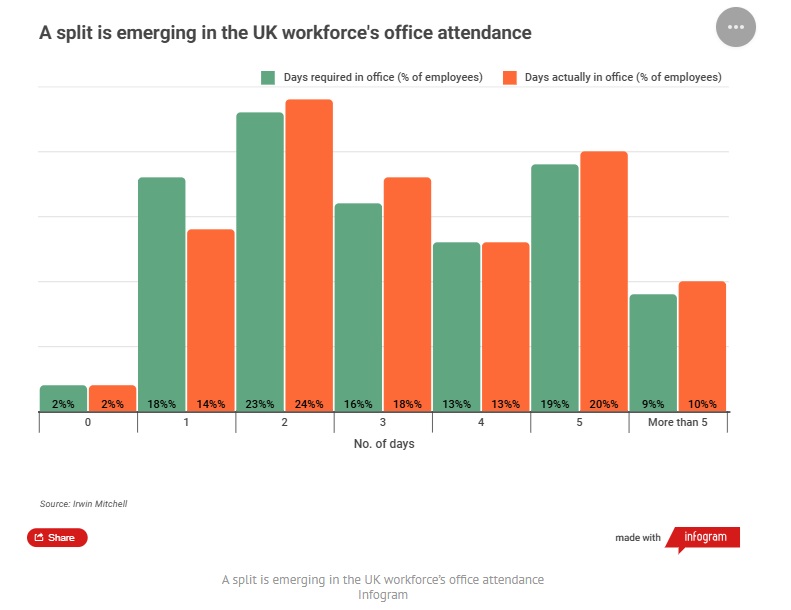
A split is emerging in the UK workforce’s office attendance
Will Scott, real estate partner at Irwin Mitchell, says: “Occupiers are clearly tightening their approach this year. Fewer are planning to add space, but the rise in relocation is important. It suggests many businesses are weighing whether their existing buildings can realistically deliver the flexibility, performance and sustainability outcomes they now need.”
Irwin Mitchell has also discovered an emerging divide when it comes to workplace attendance. Almost one in five businesses mandate five days a week in the office, with a slight rise in people attending for the full working week.
Meanwhile, many organisations take a more relaxed attitude: 23% of occupiers say they require people to attend just two days a week, while 18% stipulate only one day in the office.
Scott adds: “We are seeing more varied patterns of [office] use and a rise in voluntary attendance, which reinforces the need for space that can adapt quickly.”
 Trident home
 Follow us on LinkedIn