




UK cities are entering a new era of mixed-use development, as residential, commercial and leisure uses become more interdependent, Savills reports.
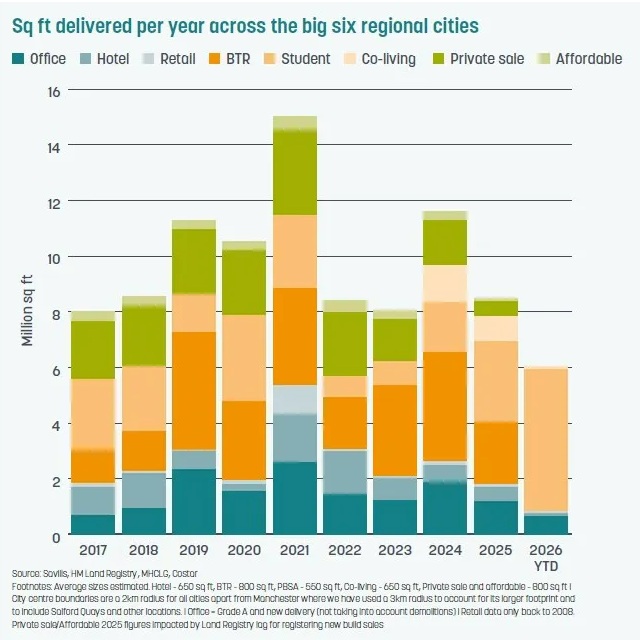
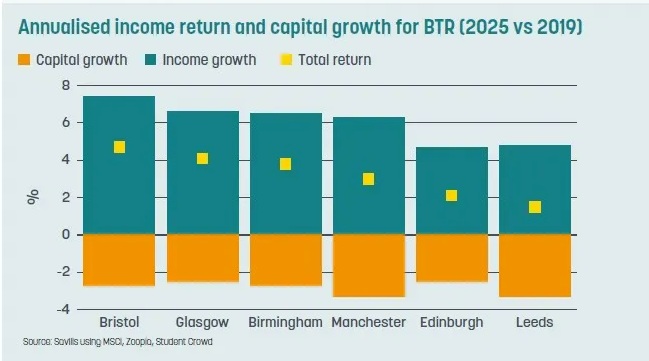
Its regional mixed-use monitor report shows residential rental tenures dominate development, as viability and structural change shape the next cycle of urban growth.
Savills reports that rental growth in the big six regional UK cities has averaged between 4% and 7.5% per year over the past five years, but build-cost inflation and viability pressures are forcing developers to incorporate a mix of uses to maintain strong development pipelines.
Over the past 10 years, build to rent (BTR) has overtaken private sale as the primary mode of city centre residential development, with BTR posting the highest total returns of all the major asset classes, according to the report. Student housing has also expanded rapidly and co-living has emerged as a growing asset class.
Savills says this new phase of development in UK cities reflects strong demand and the growing role of institutional capital in supporting large, placemaking-led regeneration schemes in response to shifting economic dynamics.
Emily Williams, Savills’ director of residential research, says residential is expected to “remain at the heart of city centre regeneration, particularly through rental-led models”, but she flags up high construction and borrowing costs and regulation as factors restricting supply.
Meanwhile, mixed use has become essential in placemaking, with ground-floor retail uses increasingly recognised as key to connecting homes, offices and hotels.
This is important as office pipelines remain limited, with Manchester and Leeds the only big six cities with new schemes due for completion beyond 2026.
Prime headline office rents have risen by an average of 30% in the past five years, but Savills warns they will need to continue that rise to meet the £60/sq ft threshold many developers consider necessary for viability.
Jonathan Lambert, co-lead of Savills’ mixed-use sector group, says: “Market polarisation is a defining theme, with larger, more established cities best placed to sustain development.”
 Trident home
 Follow us on LinkedIn